
Front Door Security
See who’s there, secure every way in, and let your home respond to every arrival.


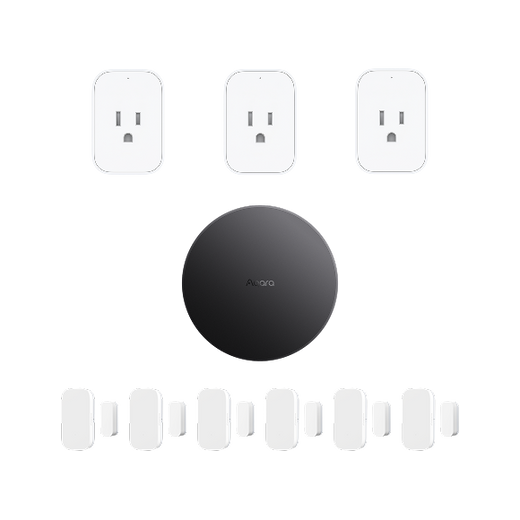
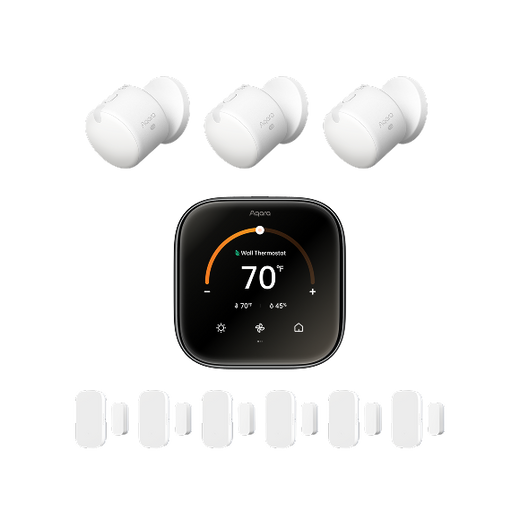
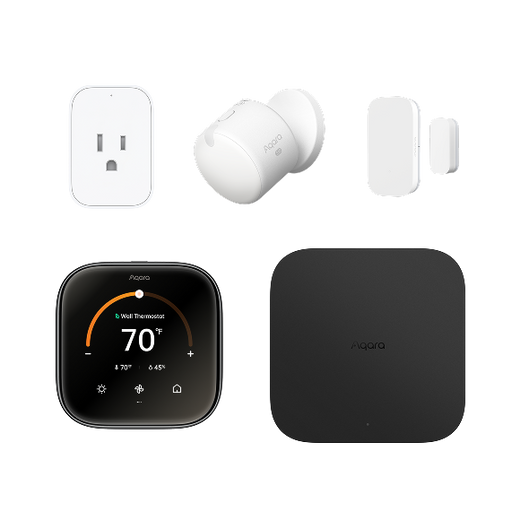


Building a smart home is exciting, but navigating technical terms can be overwhelming. When discussing smart devices, you'll likely encounter terms like Zigbee, Thread, and Matter. These main players in smart home technology make connectivity easier and improve user experience.
While all of them are related to smart home communication, it's crucial to understand their differences to have a seamless and secure connected experience.

IoT technologies have transformed the lives we've been accustomed to. These technologies make integrating many smart devices smooth and easy to manage, allowing users to control and automate their smart devices more seamlessly.
IoT technologies form a smart home ecosystem—from smart door locks, smart hubs, smart cameras, smart sensors, smart lighting, and smart controllers, among others.
IoT technologies play a leading role in the smart home environment. These technologies allow devices to communicate and share data, leading to a network of connected devices that improves our lives and productivity.
One important technology that can be considered when talking about smart homes is IoT. For example, you can monitor the temperature inside your house from anywhere, or the alarm system will send you mobile messages.
To comprehend the functions of these technologies, we must have an understanding of the concept of the Open Systems Interconnection (OSI) model. The model was created to sort out the different communication protocols and their generations.
The OSI model consists of seven layers, and each layer has a function in allowing devices to communicate:
What happens to Zigbee, Thread, and Matter in this model? Zigbee is a complete protocol that works at the OSI model's application and network layers. It has its own application and network layers, which makes it an all-stack solution for home automation requirements.
Thread, however, works only at the network layer and uses the typical IPv6 for communication. Matter, being a standard of communications that works in addition to existing protocols, does not have a particular OSI layer.
Zigbee is a wireless communication protocol intended to low-power, low-data-rate applications. It operates on the IEEE 802.15.4 standard and it uses the frequency band of 2.4 GHz. Zigbee is known for its power management and along with its mesh network, it is ideal for society, for energy consumption, for the disappearance of energy in the smart locks market.
Thread is a mesh networking protocol established by the Thread Group, which is made up of industry leaders such as Google, Apple, Amazon, and others.
Contrary to Zigbee, Thread works only on IPv6, thereby providing native internet connectivity to smart devices. This allows seamless integration with the already existing IP-based networks, which makes setup and configuration easy.
Matter is an interoperability standard introduced by the Connectivity Standards Alliance (CSA), which was earlier called Project CHIP (Connected Home over IP). The objective of Matter is to consolidate the divided smart home ecosystem by creating a universal platform for the communication of devices.
It differs from Thread and Zigbee because Matter is a smart home standard that incorporates different wireless protocols. It threads together an IP network that enables devices to work together.
|
Key Factors
|
Zigbee
|
Thread
|
|
Operating OSI Layers
|
Physical & MAC
|
Physical & MAC
|
|
Interoperability
|
Limited to Zigbee-specific devices
|
Limited to Thread-specific devices
|
|
Topology
|
Mesh
|
Mesh
|
|
Latency
|
Moderate
|
Low
|
|
Security and Authentication
|
AES-128 encryption, Zigbee Alliance Secure
|
Built-in support for secure commissioning
|
|
Market Adoption
|
High - Widely adopted in smart home devices
|
Growing - Particularly the adoption in IoT
|
|
Scalability
|
Good
|
Excellent
|
|
Network and Mesh Management
|
Centralized coordinator
|
Self-healing mesh
|
|
Cloud Integration
|
Optional - Requires additional gateway
|
Seamless with Native IPv6
|
|
Power Performance for Application Packets
|
Good
|
Excellent
|
|
IP Native Integration
|
None
|
Yes (IPv6-based protocol)
|
|
Industry Forum Breadth & Size
|
Large (Zigbee Alliance)
|
Large (Thread Group)
|

If you need a complete set of smart devices that work with Zigbee, Thread, and Matter, choose Aqara. Visit our website and Where To Buy page to explore our range of compatible smart home devices online and in stores near you.


